
Advice on Taking Care of a Patient After a Mastectomy or Breast Reconstruction
I had a very nice woman email me because she is going to be taking care of a friend after her double mastectomy and asked for tips and tricks on how to take care of a patient after a mastectomy. I figured that I would also share my advice on a blog post since I know some website visitors are caretakers of breast cancer patients and breast cancer patients themselves preparing for surgery – and my life is pretty boring cancerwise lately (feeling great). So… here goes (this is going to be really long), based on my/our experiences only, please understand. Everyone is different.
When I asked Mike what advice he would give his answer was: “Yogurt, pudding, purple Gatorade, TV in the bedroom (otherwise your wife won’t lay still), and leave them alone (pop your head in once and awhile, get grunted at, go away).” Whew, I sound like a good time. Also, he knows I posted his exact statement and he fully agrees with it, twice.
My surgery before chemo – I had the option to start chemo or have surgery. I chose surgery first. I should have healed a lot better, your body does well at this time, but stress is not good for your body’s healing process.
Surgery shortly after chemo – I opted to go ahead and reconstruct the healthy side after my complications. This was much harder, MUCH. Comparing my lat flat reconstruction on each side, my body had a very hard time recovering shortly after chemo (three weeks). My body was even madder at me when I threw radiation on top of surgical recovery. I started working one week after my mastectomy from home (my choice and a bad idea for me) and I was back in the office after two weeks after my mastectomy (bad idea for me again). I did wait over three weeks after my first lat flap to go back. I found out about http://www.cancerandcareers.org long after treatment, I haven’t spent much time on that site, but it may be helpful for other woman like me. I suggest three weeks minimum healing time after any major surgery, otherwise you chance a million more surgeries and missing more work than you would have, had you taken care of yourself in the first place…
Items to buy:
-
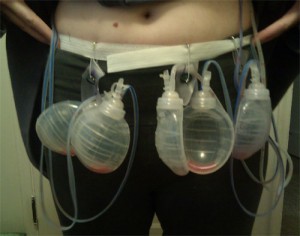
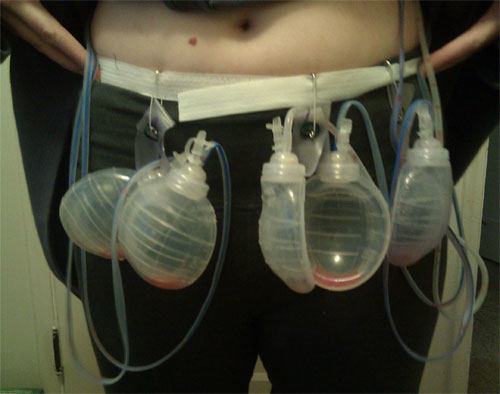
Surgical drains. Note the pudgy belly, everyone was feeding Mandi good.
Velcro, big safety pins & cotton yarn – Every woman manages her surgical drains differently. I bought a top that was able to hold three drains, but guess what, I had five surgical drains after my mastectomy and six after one of my reconstructive surgeries. The drains are worse than the surgeries. I am not kidding. Read about Gus (yes, we named one). I would usually use a safety pin and attach them to a velcro “belt” when I had several of them. For showers I would string them through cotton yarn while I showered and switch back to the safety pins and velcro. Once I got down to a drain or two I would just use yarn. The safety pin/velcro method helps with lots of drains because they can’t move around, once you are down to just a couple of drains it is more comfortable if you can adjust them, so I would just use yarn. I think I let Mike help me with them for about two days, they were gross and I preferred to manage measuring the output by myself.
- Baggy button up shirts and cover up sweaters – I spent more time finding clothes to hide my surgical drains than anything. I founds that I needed baggy shirts that didn’t rub on my chest, with extra fabric on the chest and layers of cover ups really helped hide what was going on.
- Soft foods – Yogurt, pudding, rice pudding, bananas, anything easy on the tummy. I was a fan of making smoothies – blending frozen berries, spinach, banana, ice cream (or yogurt) and milk to appease the tummy. When you have a pain killer regimen that is hard on your stomach, you need to take them with food, but half the time you don’t have the appetite. I found bananas to be easy to get in my tummy when I needed to take my medications. Stocking up on “easy food” was always first step after surgery. You may want to avoid too many foods with soy, it is a controversial food product for women with breast cancer. It is important to eat, so let them eat whatever they can get down for the first few days.
- Knee pillow – You can’t lay on your side for a long time after these surgeries. It doesn’t matter which side it was on, it hurts. The best trick I learned for feeling like I was sleeping on my side was to place a pillow under my knees so that I could turn them. I still sleep with a body pillow now to sleep on my side after my reconstruction.
- Recliner? – I bought a recliner before surgery having read that a lot of women prefer sleeping in one. After shopping for them I lost a few tears because the nice ones were spendy. I managed to find a used and very nice recliner by watching the local ads. We named it the “Mandi chair” and I just went to go sit in right now because it is so comfy. The dogs lived on this chair with me for many months (so make sure there is cat/dog/child room to squeeze in – they were my best buds). I was never able to sleep in the recliner, but it was really helpful for me when I was just resting and much more comfortable than the couch. On the nights I couldn’t sleep propped up in bed I would sleep on a futon recliner (it looked a bit like this one, I found that I had those sleeping issues a bit more on chemo than after surgery, but sleepless nights come with both). I would sleep on the futon with my back elevated and about five pillows surrounding me (I found that my other recliner required me to “push” to keep it reclined vs. the sedentary futon that kept my legs straight and put my back on an incline).
- Shower chair – I didn’t use it often, but within a day or two after surgery I was allowed to take a shower (surgical glue is some crazy stuff). I would get dizzy after the shower, so either stay close by, or have a shower chair the first days after surgery.
What not to let her do:
- I used www.lotsahelpinghands.com after a couple of surgeries to organize meals because Mike didn’t usually have enough energy to work all day, clean and make a healthy meal (when I was stuck home a speck of dust that I was unable to clean up looked like a boulder). The website allowed me to put everything on a calendar and I could look it up when I needed to, chemo does not do great things for your memory, having it on a website meant I didn’t have to try to remember who was coming when. One of the best things anyone every did for us was bringing us food, I still look back and appreciate it so much, but the hardest part was organizing it before I used the site. The website also works for setting up other tasks you need to make available for help (rides to appointments) and lets people sign up for what they can do to help when it is best for them.
- Vacuum – This motion is terrible after these kinds of surgeries. Loading and unloading the dishes from the dishwasher is just about as bad. Get help or organize help for housework. www.cleaningforareason.com is an option for people in treatment. Mike opted to take over the heavy labor instead. We discovered he is about ten times better at vacuuming than I am, but don’t tell anyone.
- Cooking – Chopping, stirring and a lot of motions made in cooking take many weeks to participate in again. I genuinely think I messed up a surgery chopping vegetables. Just don’t… have easy to make food or have people bring meals. When I was able to cook I would frequently make extra and freeze the other part for later.
- Childcare – I don’t have experience here, but from my own experience, the best thing I could do is sleep as much as possible the first week. You may want to arrange people to help based using the Lotsa Helping Hands website, but please remind everyone that the point for this is to give the cancer patient quiet time to rest and heal. It takes a lot of energy to update everyone on everything as they come to visit, it is awesome to see everyone when they come (so as the patient you definitely want to chat, but have limited energy on how long), so keep it short if you can.
What to expect: I haven’t spoken to a woman that thinks that a mastectomy is the best thing that has ever happened to her (surprising eh?). It makes you depressed (reconstruction can do the same thing, it isn’t what it was, I am happy with my surgery, but you aren’t exactly princess charming after these surgeries). You can be shocked, sad, angry, screaming inside… do all of it. You make major decisions about your body within a short period of time. Mourn. We are raised with part of our sexual appeal/identity being tied to our breasts. My surgery was a skin and nipple sparing mastectomy surgery, I woke up two cup sizes smaller than I started because I had immediate reconstruction, which made it easier, but not “easy.” For women interested in this kind of surgery, my surgeon and plastic surgeon have a site about it, PLEASE understand this website is very graphic, you were warned. When I did lose the breast expander on my healthy side due to surgical/chemo healing complications I had to relive the experience again in a different way. Just understand that this is a scary time and the patient may not always be on their best behavior.
Mike also suggested not to tell the patient that they will be “ok.” I hated being told I would be ok, I wasn’t ok, and I was weird about being told that. I needed to decide that for myself (prayers, well/healthy/healing wishes, support, caring thoughts, luck, all of that is greatly appreciated, I just wasn’t “ok,” and didn’t like being told I was going to be that way). This could just be me! I am still wary about being called a survivor, I just tell people I have had breast cancer treatment. It is all about personal semantics.
What I honestly don’t know: How women have surgery and care for babies, young children, etc. I have major respect for women with children that go through breast cancer treatment. I wish I could give advice here, but I can’t claim experience in an unknown.
Update 3/5/15 Brobe:
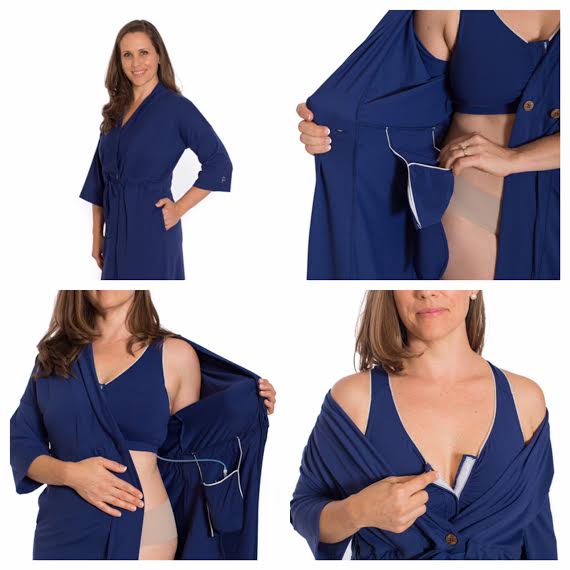
I don’t do have many products on my blog that I haven’t personally used, and don’t do a ton of promoting, but when I receive a nice email like the one I received from Allison, the creator of the Brobe I felt like I should at least look at her hard work and creation – the Brobe. She asked that I check it out and even offered compensation if I wanted to advertise it, instead, I asked for a free Brobe to give away to someone who was having surgery (in the hopes that it would help someone out that was having surgery or planning reconstruction – plus maybe I could get a note on whether or not it helped them out). Surgical drains were a royal pain in my butt, and getting comfortable after surgery was difficult. The Brobe looks like a comfortable way to help manage the darn things (I had as many as 6 after one surgery).
Brobe contest is closed (I was not compensated for this post)
Please add your suggestions and recommendations in the comments below:.
